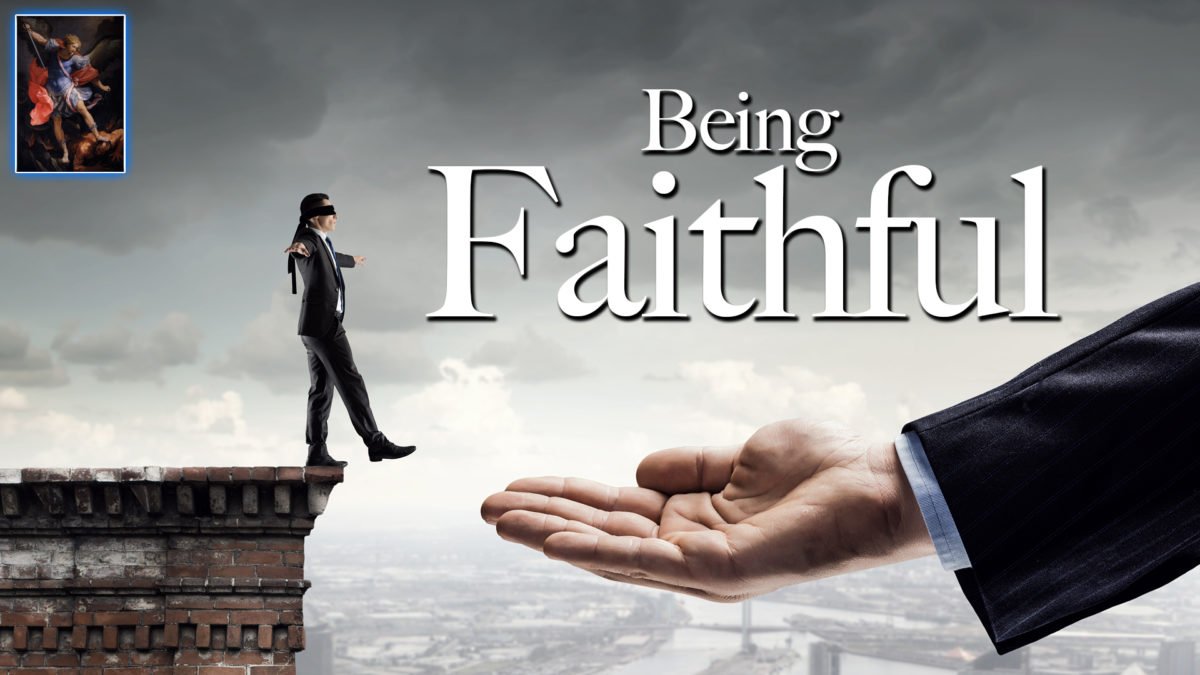
Should a man really be true to his word — at all costs? Is this bedrock American value still alive today? Was it ever really true for most Americans? Given the choice between doing the right thing and the smart thing, which would you choose?
Bill Whittle and Alfonzo Rachel create two new episodes of The Virtue Signal, talking about the morality underlying the news, politics and everyday life. They’re funded by our Members and donors. We’re grateful to each one.
9 replies on “Faithful: Is Being True to Your Word Still a Bedrock American Value…Was It Ever?”
In a sense I understand Regulus. There is an old concept of living your life with honor, no matter what. Most of the time that makes your life, and all of society better. But it only works because of the “no matter what” part — (at least we can say that makes it work exceptionally well).
As an example, I read about one of the Crusades (I think it was in the book, “Poland” by Michener), in which 300 Crusaders were captured by Muslim forces. They were all going to be beheaded. But because the Muslims knew that the Crusaders would not break a vow, they agreed to let them all return to their families for 3 days to wrap up their affairs and say goodbye, on condition that they vowed to return.
The only reason their captors would make a deal like that was because they knew that the Crusaders would rather die than break a vow. These people had a sense of honorable society that transcended themselves. Had they skipped town, they would have gotten away — but then no future Crusaders would ever get that deal again.
Speaking of not locking our cars, back in the 50’s General Motors cars had an ignition key/lock system that could be turned to off (but not locked) and the key removed. This would allow the car to be restarted without the key any number of times. The ignition had to be explicitly ‘locked’ in order to require a key. I almost never used the key for my 57 Chevy.
Ditto! My 57 Belair and my 64 Impala were like that. We would get to an overpass and turn the key off for a second or two then turn it back on while we were under the pass and BOOM! Those were the days!
I think here it’s one of those extreme examples of a transcendental value. When you swear you will do something, you follow through.
On the other hand, if you are coerced into swearing, though, I’m not going to hold you to it.
Agreed. I would have had no problem not going back to the Carthegenians
… Unless I was bringing a plague or a nuke with me. If I’m going to die in Carthage, I’m going to take as many Carthegenians with me as I can.
I would have brought Scipio Africanus, but that’s just me =8^)
LOL 😉
Duress is always a legal reason to nullify any agreement. That’s why blackmail can never be a binding contract legally.
This is not a matter of codified statute, it’s a matter of Common Law and Natural Rights.
My point being that I’m sure those concepts were not alien to even the ancient Romans. So I agree with you. Transcendental Value Lesson.