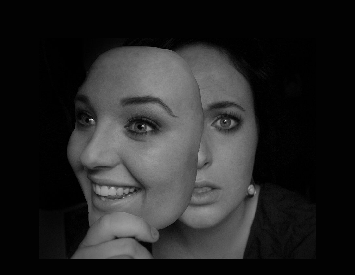
“All the world’s a stage. And all the men and women merely players.”
As You Like It, Act 2, Scene 7
Role play crops up in our lives in various guises. I’ve taken part in it (willingly and unwillingly) for fun, as part of my job and even at school. I’m not talking about performing for the public, although I have done a certain amount of that, but taking on another identity and playing out a situation, with no one observing other than those taking part. I thought I’d share some of my thoughts and experiences; I hope you find them of interest, and I invite my fellow Whittlers to contribute their own thoughts and experiences.
The one many folk have experienced, often with great reluctance, is during work related training. I’ve lost count of the stilted, awkward pretend job interviews I’ve taken part in during recruitment training. I’ve had “difficult conversations” and Lord knows what else during the long tedious hours felt necessary to get to the 20 minutes or so of useful content of most modern management training. I’m not saying roleplay can’t be useful in this sort of training, but often it is done in such a perfunctory manner as to be next to useless. Also, it is often carried out in front of the group, which robs it of what little reality and use it has. I have even seen it effectively used as a pale imitation of Red Guard tactics during the Cultural Revolution, turning the group against individuals who aren’t “getting with the programme”. In fact, looking back on a lot of the work training I’ve gone through in the last two decades, an awful lot of it would fit right in with late ‘60s China.
Two quite different, and far more elaborate and imaginative uses of roleplay come from my school days, in the mid ‘80s when I was 13-15. The class based one must have been in 1985, the tercentenary of the end of the wars of York and Lancaster with Battle of Bosworth and t he death of Richard III. There was a lot of re-evaluation of the traditional view of Richard as a villain, especially regarding to the murder of Edward V and the Duke of York (the Princes in the Tower) and the Yorkist revisionist star was very much in the ascendant. We held our own trail of Richard III in class, we were given source material to study, then we were each given a role and we put together out cases. Finally, we staged the trial. As a barrister for the defence I still have some pride in saying the jury returned a verdict of not guilty. This was back when children were still being taught how to think, not what to think. It was an excellent lesson in evaluating and presenting evidence. Indeed, today, although I remain a romantic Yorkist at heart, I have looked at evidence on Richard III through the years and have revised my position. Although I’m not 100% convinced of his guilt, he is the most likely perpetrator of the murder of the Princes in the Tower.
A second roleplay exercise, again in history class, took place around the same time, maybe a bit earlier. This one had less intellectual impact but had a massive emotional one. We were taken on a field trip to the Imperial War Museum in Lambeth, South London. When we got there we were surprised that were not taken on a tour of the various  displays telling the story of the First and Second World Wars, but instead we went into the depths of the building, off of the public routes and sat down in a large room.
We were told it was 10th May 1940. We were Dutch townspeople. We had woken up to see German tanks and troops in the streets. They gave us cards with brief details of who we were, including our religion. We were then told that here we were, gathered in the townhall, to be addressed by a German official who wanted to explain the situation. Two men in Wehrmacht uniforms carrying schmeisser machine guns strode in, followed by a guy in a long black leather coat. He was civility itself as he told us that the Germans had only come to protect us from French and British invasion, they were there for our own good and that our cooperation was needed etc. etc.
As the day went on, we were questioned about our selves and our neighbours, split up and put into different rooms, always with one of our teachers with each group. We were given tasks, and when left alone we would discuss them, and try to work out if we were helping the German war effort and how much, or even if, we should resist. It was a very intense experience. It gave me the most profound respect for folk who did have the courage to resist the Nazis (and all the other vile collectivists who brought hell to the 20th century). It also showed me something that the popular culture around the Second World War tended not to do, namely that evil does not come riding into town announcing, “Hi everyone, we’re the baddies, time to start resisting!”. No, evil does not proclaim itself openly, it always wears (with varying degrees of credibility) a mask of righteousness.
One last example of roleplay is from my social life (don’t panic, this is a family show). A friend and work colleague runs an ongoing fantasy role play campaign. Not teenagers running around as Xena and Conan (nothing wrong with that, did it myself in my youth) but a sophisticated sci-fi horror game based on the Cthulhu stories of H. P. Lovecraft. He does, at most, two events a year and they can be very elaborate. The most memorable was four years ago, he hired a 100-acre wooded event site in South Wales that specialises in this sort of thing, about 30 people took part in total. The actual players paid a certain amount to cover costs and those of us who were non-player characters took part for free and acted as background support when not in character. We arrived on Friday night, the game started on Saturday morning and ended after sunset on Sunday. The players were in character for a good 36 hours.
The initial scene was a training camp for a “stay behind” group in Britain 1940, effectively training to be partisans should the Germans invade. At the start I was a ringer, a non-player character that the real players thought was one of them. Billy Brodie, a taciturn Scottish sailor. For 8 hours we trained (we actually did do some weapons and unarmed combat training), solved problems, explored and fought. When I bled out after being stabbed in the back by some invisible monster the group’s reaction to my death was only part roleplay. Over the rest of the weekend the group moved through various scenes in different times and places, mostly in 19th century southern Africa and WWII Europe. I reappeared as a Victorian businessman, an explorer, a Nazi occultist, a Colour Sergeant of the 24th Foot at Rorke’s Drift (a dream of mine) and a Zulu animal demon wearing a massive lion mask and carrying shield and spear. The players had been in the game for getting on for 14 hours at this point. A half dozen of us appeared as the demons on the ridgeline of a shallow valley, silhouetted by a nearly full moon, as they walked cautiously along a wooded trail some 20 feet below us. Later the players described it as the most terrifying moment of the whole game. Certainly, their initial reactions gratified my inner sadist.
The group included some folk who perform for a living and more who own all sorts of costume and kit that helped make the whole thing so believable, (one guy actually made a gas powered 50 calibre machine gun, that felt and sounded very real when “fired”!) so we were at least partly a pro group. Nevertheless, it really showed me just how people can come together to entertain one and other without recourse to the “legacy media” who use their position to bolster the leftist world view. Although when all’s said and done it was a super elaborate game of dress up, it is also interesting that in a 21st century Britain, so safe and comfortable, the urge and willingness to leave the comfort, to feel the thrill of fear (albeit from simulated danger), to explore and test yourself, is still there. Or at least it was, before the CCP virus hit.