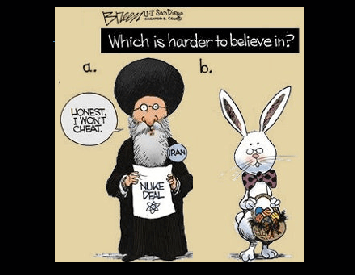
Fun and Frolics with the Fatwa Fraternity part three
The doctrine of taqiyya is a controversial one, even within Islam. Put simply, taqiyya (meaning fear/prudence) is the doctrine that it is legitimate for a Moslem to deceive non-believers when necessary. The justification for this is in the Quran, the two main verses being:
Surah 3:28
“Let not the believers take for friends or helpers unbelievers rather than believers; if any do that in nothing will there be help from Allah; except by way of precaution that ye may guard yourselves from them. But Allah cautions you (to remember) Himself for the final goal is to Allah.”
Surah 6:106
“Anyone who after accepting faith in Allah utters unbelief except under compulsion his heart remaining firm in faith but such as open their breast to unbelief on them is Wrath from Allah and theirs will be a dreadful Penalty.”
(Yusuf Ali translation)
There are also incidents form the life of Mohamed where he used deception. The most trusted compiler of Hadith, Sahih Bukhari, quotes Mohamed as saying, “If I take an oath and later find something else better, I do what is better and break my oath,”
Mohamed’s companion Abu Darda is quoted as saying. “we smile in the face of some people although our hearts curse them,”
The highly influential 14th century scholar Ibn Kathir says “meaning, except those believers who in some areas or times fear for their safety from the disbelievers. In this case, such believers are allowed to show friendship to the disbelievers outwardly, but never inwardly.”
The concept has been studied and developed and it is viewed differently by different schools of Islamic thought and belief. There is a fairly general consensus that it is legitimate to deceive non-believers when under compulsion or when a Moslem’s life is threatened, although even then some authorities say it better to choose the path of martyrdom. It can involve straight out lying or actions such as eating non-halal (haram) food in order to deceive. It is also the basis for allowing a Moslem to eat haram food when no halal is available. If you want to look at this more closely, in a better written and more informed piece I reccomend Raymond Ibrahim.
https://www.meforum.org/2095/islams-doctrines-of-deception
Taqiyya is for eveyone, not just for Shia
It is worth reiterating this point here. It is usual, if the subject is brought up in the MSM, for taqiyya to be dismissed as something only practiced by Shia Islam, and then, just like, y’know, in the olden times. Anyway, just move along, nothing to see here you Islamophobe! This is categorically not the case.
It is true that historically (and today) the persecuted Shia minority have had much more reason to use taqiyya, and early on it was largely Shia scholars the developed the concept. No doubt many Sunni Moslems do regard it as a Shia thing. This does not alter the fact that the concept comes from the Quran and Hadith and is common to both Sunni and Shia Islam. Ibn Kathir was a Sunni as were many of the scholars who have debated and developed the idea down through the centuries. Taqiyya is not so much a Shia/Sunni thing, as a weak/strong thing. When Sunni Islam was all conquering there was little need to lie and doing so would have seemed dishonourable; but seeing themselves as “under threat” many Moslems today do not have the same attitude. One example of taqiyya in our time is the 9/11 hijackers who drank and ate pork in order to appear as secular Moslems, they were most certainly not Shia.
Oh, what a tangled web we weave…
Of course, deception is not unique to Moslems, especially when people are under threat or in extreme circumstances like a war. If soldiers come into your village and say, “We’re going to kill all the Shriners. it is perfectly rational to lie and say, “I’m not a Shriner.” Deception is at the very heart of espionage and the Second World War would have been far longer without it. However, I think the concept of a religious doctrine actually legitimising and making a virtue of deceit is deeply toxic, especially in times like ours, when the slightest criticism can be seen as “an attack” and words are often held to be the equivalent of violence. The alliance here between Islam and the progressive left is an example (and not for the first time) of how some of Islam’s more troubling aspects are made worse by exposure to bad western ideas. In fact, you can see taqiyya leaching out. The downplaying or complete suppression of elements of some news stories by both police and MSM is surely an example of taqiyya by proxy.
There are good, decent Moslems who do genuinely want to live in peace with their neighbours, there are also secular Moslems who define themselves as Moslems for pretty much cultural reasons and are simply not that fussed. The problem is, how do we tell these folk from a radical with jihad in his heart, taqiyya in his mouth and a plan in his mind who is saying things we want to hear merely as a tactic? Is the guy on the TV pleading for tolerance after another attack a good man who is concerned for his people, or is he playing good cop to the jihadi’s bad cop? Taqiyya poisons the well. Again, like with the Doctrine of Abrogation, until Islam is reformed and taqiyya de-legitimised we can’t know. Taqiyya has Quranic justification and the Quran is unalterable and unquestionable. Islam’s cleft stick once again.
One reply on “What do we do about a problem like taqiyya?”
The more you post on this, the more I wonder how I in particular already know almost everything you have said. I am not Muslim or even know one. I read a lot, and got what I know from one book that I cannot find or remember the name or author. The word Taqiyya is new to me, but not the concept. Keep up the good work.