Are we there yet? Well, technically, no. However, we are making good progress. What am I talking about? The future. Both here on Earth and in space.
The Apollo Era certainly made a splash, but unfortunately it ended up being a rather short victory lap. The Space Shuttle program seemed quite promising at first, but it too ended with unfulfilled potential and worse left the US without a manned space capability for almost a decade. After all that, progress to restore human spaceflight to America seemed almost glacial. We waited for Space Launch System (SLS) and the Commercial Crew Program and received setback after disappointing setback. The premise behind Commercial Crew was rather clever if only it would yield results. Two companies were chosen, Boeing and SpaceX, to design and build their own spacecraft to return human spaceflight to American soil. The idea was that even if one company should experience some kind of technical setback, NASA would be able to fall back to the other company so that a planned mission wouldn’t have to be scrubbed entirely. It took some time, but recently SpaceX finally achieved readiness and launched a Dragon 2 Capsule (named Endeavour by its passengers) which flew into history on its way to the International Space Station carrying astronauts Doug Hurley and Bob Behnken. This was the Dragon’s first manned test flight, which will be followed up by NASA’s first official mission using the spacecraft. Unfortunately for Boeing’s Starliner their initial unmanned flight test wasn’t so positive and is again delayed until numerous issues can be worked out.

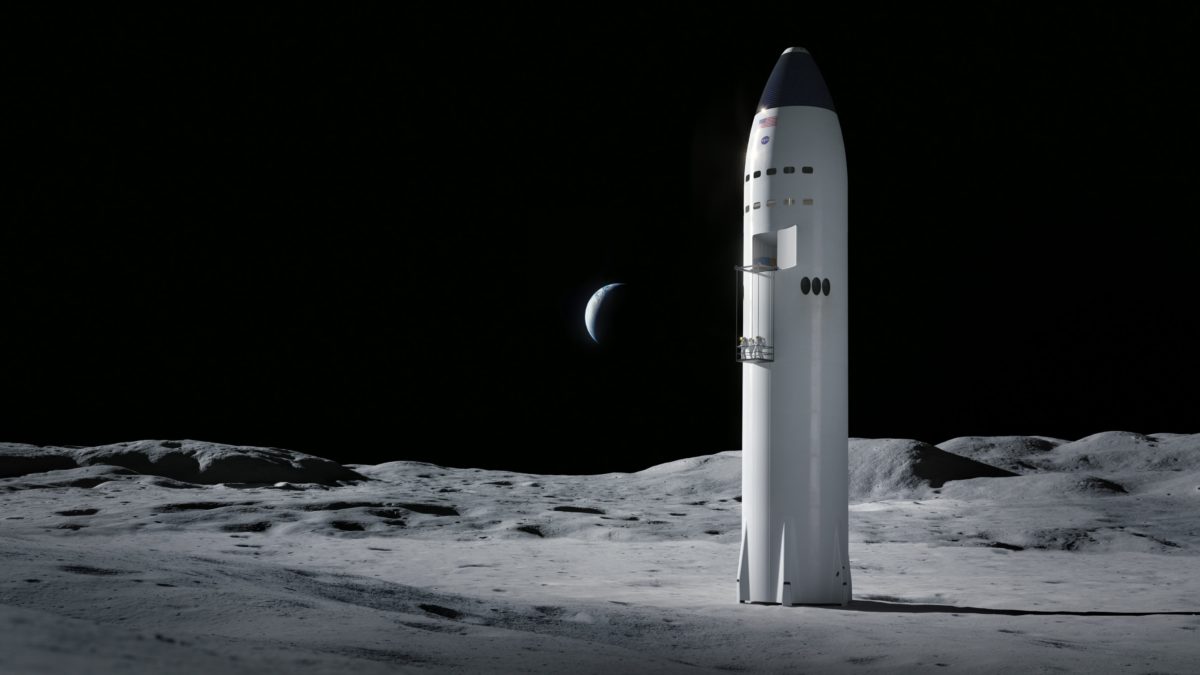
As wonderful as it is to finally have manned spaceflight into Low Earth Orbit from American soil, that’s hardly “the future”. Right? Well as it turns out, Elon Musk and his company SpaceX are hard at work solving that engineering feat too. Where once a small oceanside village resided in Boca Chica, TX there is now a busy and expanding Starship manufacturing and testing site. They’ve been steadily refining their manufacturing and design methods and will soon be making a short “hop” or test flight with a new test vehicle. This isn’t the first time, as just last year they made two short hops with a more crude prototype. This time it will be with a larger and more complete version of Starship, the rocket design that SpaceX is pinning all their hope on. When completed, Starship will consist of two fully reusable vehicles that will be attached together as one vehicle during launch. Upon reaching orbit, the second stage called Starship will continue to orbit while the first stage called Super Heavy will return and land at the launch pad. Once refueled in orbit Starship will be able to deliver upwards of 100 tons to the Moon, Mars, or almost anywhere else in the Solar System.
The rocketship will also be able to carry potentially up to 100 passengers at a time. It will be able to do so at a much cheaper price tag than any rocket before thanks to its full reusability. On a given launch the primary expense will be the fuel since the rocket itself doesn’t have to be scrapped after each flight. SpaceX isn’t just building all that capability for its own sake though. No, they have big plans. Ultimately, nothing short of a fully colonized city on Mars is their goal, with lesser accomplishments along the way. To that end SpaceX isn’t just planning to build a few Starships, they’re planning to build many of them, as many as a thousand.
That’s… a lot. It’s also going to require an insane amount of funding to accomplish all of that. While SpaceX’s launch business is quite good compared to everyone else at the moment, it’s not enough to pay for those lofty goals. Enter, Starlink. SpaceX has already launched hundreds of Starlink satellites into orbit with thousands more to follow. They will soon begin beta testing of the network and begin providing internet service in North America. It’s aimed at rural areas that either don’t have internet or low quality service. Starlink is boasting higher speed and better quality than traditional satellite internet service providers. Some are projecting that Starlink may earn as much as $40 Billion a year (almost twice NASA’s annual budget), and with that profitability SpaceX hopes to achieve its goals. Before they are done Starlink may have as many as 42,000 satellites in orbit providing global internet coverage.
In addition, the US military has signaled interest in both using Starlink and Starship for their own purposes. The new US Space Force or perhaps some other branch may want to get a Starship to be able to deploy troops almost anywhere in the world within an hour. This is paralleled by SpaceX’s own aspirations to use Starship on Earth as a high speed passenger service around the world. Of course, it may take some time for Starship to earn that level of trust with such precious cargo. On the other hand, high speed cargo of the non-human variety is another possibility. With full reusability and capability to launch again and again, cargo transport might be an easier goal to achieve in the short term while keeping profitable. NASA too has expressed interest in Starship as a Moon lander and has even given SpaceX a decent sum to look into the idea.
In short, Starship will be capable of many uses on Earth, the Moon, Mars, and around the Solar System. If SpaceX can make it work as envisioned “the future” in many ways really will have arrived. It will make many projects that were unfeasible, suddenly possible. The sheer amount of lift capacity at relatively low cost will attract many investors that were previously unconvinced. As was said in the movie Field of Dreams, build it and they will come. Baseball has been called the American pass time, but trailblazing new frontiers is also an American tradition in more ways than one. If the US doesn’t press the opportunity to spearhead the final frontier, there are others less friendly that aspire to take the lead.
(Knowing Bill Whittle’s affinity for the Space Program, maybe what I’ve talked about here is already well known. Either way, I hope it doesn’t bore anyone and I look forward to any constructive feedback and discussion. This is my first blog here and hopefully it wasn’t too far into the outfield.)
7 replies on “Are we there yet?”
Apropos this conversation: a great Stossel clip I just noticed, “SpaceX Does What Government Won’t”:
https://youtu.be/DP2l2oJUJY4
While the line’s not as clear-cut as the Zubrin interview clips and other sources make it out to be (the government (taxpayers) is/are still footing the bill, and “NASA’s” spacecraft have always been built by private contractors), Musk has nonetheless produced massive cost savings by deviating from the usual, pork-laden program and its counterproductive incentives. Factoring in competition from other companies is likely to produce some amazing further advances that we’ll be lucky enough to live to see.
It just so happens that I watched that video earlier today! I’m subscribed to John Stossel so it came across my feed shortly after dropping. Speaking of Dr. Zubrin, I’m currently listening to the audiobook of his The Case for Space, which also finally dropped recently on Audible. Great stuff for the space enthusiast. I often listen to audiobooks while I drive, and I took a break from the Enderverse (From Ender’s Game by Orson Scott Card) to listen to this new book. It really paints an interesting picture of what the next few centuries may look like in the Solar System. I was particularly fascinated by the idea that Saturn’s moon Titan may become one of the major world’s we colonize someday, and that humans can survive on Titan with a sufficiently heated suit and a basic oxygen mask. Even on Mars we’ll need more than that until we can sufficiently terraform it closer to Earth standards.
James, I am always delighted to hear from people with an interest in this stuff! Musk’s visionary thinking on making us multi-planetary, and the inspiring, determined progress SpaceX have been making, have had a huge effect on lifting me out of potential gloom — gloom that I realized was predicated on the assumption that we are stuck fighting a purely defensive war and the U.S. is our last stand and last refuge. Colonies on Mars and the Moon are a big, ambitious dream, but that dream is within our grasp as the Mercury, Gemini, and Apollo programs demonstrated. When Bill talks about the beautiful idea of “America in Space”, that’s exactly where my head and heart are, and I’m keen on figuring out what the next steps are going to have to be to make it happen, and finding ways to contribute. The beautiful thing about this beloved country of ours is that it is not about a particular place but an idea, and that idea can be given new life anywhere we choose. The human yearning to be free cannot be snuffed out no matter how hard our opponents try. We will find a way. And while I hope for a more immediate, practical solution that doesn’t necessitate interplanetary travel and building new colonies in profoundly harsh environments (there are plenty of harsh but more forgiving environments on Earth to potentially fall back on first), I’m glad to know that avenue is being worked on in case it comes to that. Thank you for your post and please feel welcome to follow it up with more in the future as far as I’m concerned! I continue to watch the SpaceX launches with my sons, and have Test Shot Starfish, “Music for Space” on heavy rotation in my playlists, so no amount of repetition will wear this fanboy down. 🙂
Troy, thank you for your kind comments! I couldn’t agree more. Both myself and my dad are enthusiastic fans of the Space Program in general and of SpaceX. I’ve been fortunate enough to have visited Kennedy Space Center twice in the last two years and to have seen my first rocket launch in person, but hopefully far from my last!
I too am a patriotic American and a staunch Constitutionalist. I very much want the ideals that are America to last beyond our great land and on into our cosmic future. Especially in light of the fact that our ideological adversaries are making their own plays to dictate the future. I am particularly concerned because China is actively trying their own hand at landing rockets and reusability. I suspect they will be willing to push the envelope harder regardless of risks to their own people.
On the other hand, I am encouraged that the US will have friendly partners helping us in our own endeavors. Both Canada and Japan have already committed to working with the US, and Australia seems a very strong candidate as well. I don’t doubt that the European Space Agency will want to play their own part. Of course, recently the head of Roscosmos has signaled they may be willing to work with China in future Moon missions, but hopefully that is merely saber rattling on his part. Well, Elon Musk did say we need a good old fashioned Space Race..!
James, I dream of going to see a launch there (!), and aim to do so once travel is possible again. I did get to visit KSC 2 years ago and was massively inspired by the experience — from getting to walk the Rocket Garden (how incredibly small those Mercury Redstone rockets were!) and see the Saturn V stages and Apollo 14 capsule to getting a glimpse of SpaceX’s hangar from the bus and seeing and feeling firsthand the new life that’s being breathed into LC-39. Unforgettable.
You make interesting points regarding our rivals and potential partners/allies. It’s something I haven’t given much thought to yet but will now. A “good old fashioned space race” does sound like a lot of fun. And our future may depend on our success!
In a way I’m glad for the rivalry, because quite frankly our government needs a spur in the rump to get its attention. Congress is already making disappointing decisions in regard to the Artemis Program. Hopefully some of those poor choices can be reversed with a Trump win, although that doesn’t necessarily mean that Congress will make better decisions. Having China fiercely pursuing their own Space Program may be a sufficient prod for them to act more responsibly in matters space related.
Aside from the stick in one hand, I’m hoping that SpaceX’s success can be a carrot that will push NASA ahead despite Congressional apathy. I’ve no doubt that NASA will invite itself along to whatever successes SpaceX achieves, and likely the Space Programs of allied nations will also hitch their wagons to Musk’s star. If SpaceX can develop the technology, there will be no shortage of potential customers looking to place infrastructure in the sky.
I’ll be glad for whatever amount of that we can get, but I’m not counting on or expecting much from NASA or government in general in this arena. I expect the “spur in the rump” to get the most traction among space entrepreneurs, and to succeed in producing great reductions in launch costs that will make a big, important difference. Once the cost of a ticket gets into the ballpark of the sacrifice a trans-Atlantic colonist would have been willing and able to make, humanity’s next chance at untrammeled freedom will be in business.