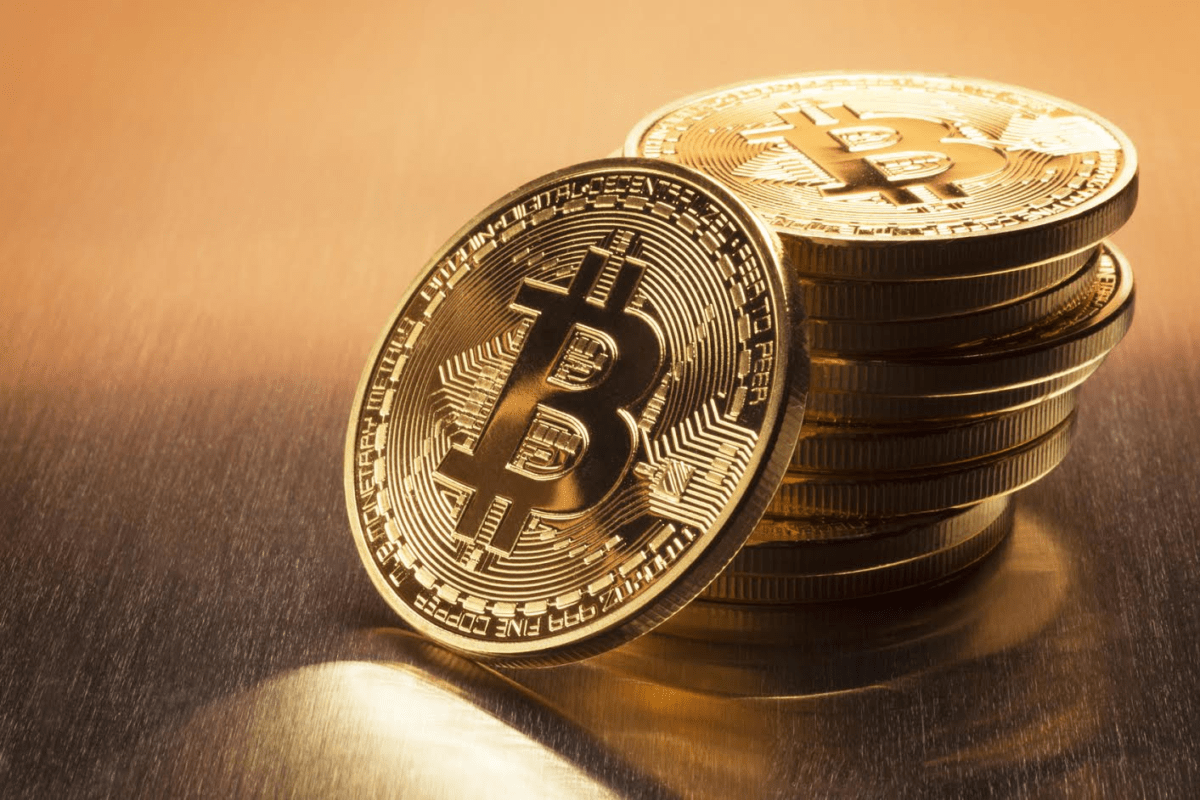
I will add my voice to the people saying they saw MBtA Ep. 0. The talking points about blockchain services and not supporting the anti’s combined for me, so here’s a thought: invest in and support cryptocurrency by not only buying whichever crypto tickles your fancy, but offering your services in crypto as well as USD.
I tend to write essays when I’m excited about a topic, so I’ve titled my paragraphs so you can jump to whichever one you’re interested in. If nothing else, please check out “The Strategy” down towards the bottom.
First Off – Why?
I love the USA. But you can’t print cryptocurrency. If we switch to crypto, the anti’s won’t be able to spend like they do. Right now, crypto hasn’t penetrated the market very far, and it’s not as if you can buy your groceries in bitcoin. However, my SO and I are aiming to own a farm in the near future; the idea is that WE can make it possible to buy your groceries (or other daily necessities) in crypto. The more different businesses, big and small, accept crypto as a form of payment, the easier it will be for us to leave the USD behind.
I’m not saying sell exclusively in crypto, but accept it as a form of payment, and advertise that you do. Maybe even offer discounts if someone uses crypto. But as a word of warning… if enough Americans move to crypto, the USD could collapse, and we’ll have to be prepared to catch the good people who haven’t switched yet.
Bitcoin – Digital Gold
Two years ago, when I first took it seriously enough to buy into (but my broke wallet had to take back), it was at roughly $12k/coin. Now it’s at $19k, and I’m wishing I’d kept mine. Numerous major corporations are buying into bitcoin – investing in it like gold (see MicroStrategy, run by “Bitcoin CEO” Michael J. Saylor). The advantage bitcoin (and other cryptocurrencies) have over precious metals is that you can sell microscopic amounts of it. Nobody trades in gold dust or gold atoms, but you can trade 0.00001 bitcoin for 20c (as of this moment).
Of course, bitcoin isn’t the only one out there, and the currencies still fluctuate pretty hectically. I’d recommend having a diverse portfolio – just as you might buy gold and silver and platinum and so on. And as we’ve seen, having a centralized anything (even if it’s decentralized bitcoin) opens things up to failure. So diversify, both in what you buy and what you accept as payment.
Filecoin – The New Internet
While surfing around last night looking up different types of crypto, I found something y’all might find really interesting. Filecoin, in a nutshell, is a service that stores information in a decentralized way. If it is what I think it is, then it’s exactly what Bill has been hoping for. Right now, its primary use is the storing of information, and the examples they gave in their Explore videos (literally first thing you see) were of important documents. They do a much better job of explaining it than my feeble attempts, so please check them out.
It still seems pretty new. But Wikipedia is already planning to store a backup of itself with them, and if it pans out the way I think it will, then it’s only a small step to go from important documents to HTML documents and websites – to a decentralized surfing experience.
Pi – Maybe Free Money?
The value of a single bitcoin should be making you jump up and down and squeal in delight. But if the concept of 0.00005 as a $1 bothers you, or you’re the kind of person who likes to explore your options, there are a LOT to choose from. In fact, one of the currencies I’ve been watching for some time is Pi. Their system allows you to mine on your phone, and the value they offer is that of real humans versus bots mining bitcoin. It doesn’t have any value yet, but millions of people have been mining Pi.
It costs nothing to mine, so if you have no money but still want to get into crypto, try it out. All it takes is opening the phone every day and tapping a button to remind them you’re human. You can mine at a higher rate if you invite people/add them to your “earning circle,” and we’ve got a fun crowd here; you might get a few willing to play along. 🙂 Just remember that any currency eventually needs someone willing to put value into it, so it’s not like it’ll suddenly be money down the line if you’re not willing to take that leap yourself.
The Strategy – Where to Start
If you’re totally new to cryptocurrency and don’t even know how to get it, try Coinbase/Coinbase Wallet. Coinbase is an exchange, where you can trade USD for bitcoin, ethereum, and a number of other crypto. Coinbase Wallet is a phone app that lets you scan a QR code to send and receive your crypto – that’s how you’d send or accept payments for goods or services rendered.
The Strategy – How You Can Help as a Business Owner/Contractor
As I alluded to earlier, you can’t currently buy your groceries in crypto. But if you’re a business owner, start accepting crypto as a form of payment. You don’t have to sell cars in bitcoin if you’re concerned about the currency. And in fact, I’d advise against that. If you’re selling gum, or gas, or artwork, or labor, say you’ll take crypto. Advertise that you take crypto. You don’t have to sell exclusively in crypto, just give people the option. It’s all about giving us a way out.
The Strategy – How You Can Help in Other Ways
Even if you don’t sell goods or services (i.e. you’re an employee or you don’t make the rules about how you get paid), buy crypto. It doesn’t have to be a lot. Think of it as investing in precious metals, or a retirement plan. I have a teeny tiny budget, but I’ve been good about putting $10 away for my retirement (which I hope will be a LOOOONG way off since I’m still only in my 20’s), so I switched that over to crypto. If it dips in value, well, it’s about as much damage as eating out once or twice that month. If it rises in value, it won’t be much, but it’ll add up. Eventually I’ll be able to add more as I pay off the rest of my degree and contribute to society.
Far more importantly, USE IT. Find the places that allow you to pay in crypto. Figure out what they offer, and next time you need it, get it there. Show them that it’s worth offering that option. That more than anything else you do will validate crypto and help it take over the market.
Will It Work?
The whole point of this is to disengage from the anti’s and focus on Americans. Our goal is to support the American ideal and prevent the enemy from abusing us. But there’s nothing that would stop the anti’s from joining us in cryptocurrency, right? They’d just make us pay our taxes in bitcoin, right?
If I may say so… that’s the point.
They can’t print crypto. They can’t force us to use whatever currency they invent. And they can’t put an ounce of value into anything. We are the producers. We choose where our value goes. Americans are the ones who determine the worth of a currency.
They can print all the paper they want. They can stamp all the coins they want. They can create all the debt they want, and they can have the ruins when it finally blows. If we have value in crypto, we’ll be able to ride out the storm.
But I can’t stress this enough. If it works, and Americans successfully transition away from the USD and the USD collapses, we need to be prepared to catch our fellows who didn’t jump – whether they didn’t notice it or didn’t think they needed to. You don’t have to be willing to invest in crypto to be an American… and we don’t want to lose any of our brothers or sisters.
Suggestions/Comments/Criticism Welcome
I’m no economist. I’m a code monkey fresh out of college still eating ramen and buying cheap Chinese knockoffs because I need something but still need to (and want to) finish paying for the education I got. So I have a middle-to-lower class consumer/contractor perspective. If y’all have ideas or think I missed something, please feel free to jump in with ideas! Like Bill, I’ll move to where the truth is (or I’d at least like to think I will, lol).
4 replies on “Back to America: Free Markets and Cryptocurrency”
One interesting thing about cryptocurrencies is that people look at them as both a medium of exchange and a potential investment. Their volatility to date makes me reluctant to use them as anything but digital cash, so I wouldn’t see holding them as any more than the cash part of my assets (<=10%), but that said holding cash has its problems too (slow inflationary decline in value) and maybe the volatility will improve as various cryptocurrencies become more established.
That’s part of why I’m suggesting that businesses offer mundane things in crypto. It may be an untenable idea, I dunno, but I feel like if we start using it for the mundane things, that will help it even out as well.
I want my paycheck to be sent out using blockchain, so when the tax man comes around and says “how much do you owe me this year”, I can answer back with “if you can prove I made any money I’ll pay taxes, until you prove it get off my lawn”
Thanks for the education and for raising the issue! I’ve been trying to learn more about cryptocurrency and other potential blockchain applications while seeking key questions to ask and retaining some healthy skepticism. Your assertion that the gov’t starting to tax cryptocurrency income is OK (“that’s the point”) is an interesting take I haven’t seen put forth before and I’ll be giving it further thought. I take it what you mean is that at least we’d have removed their ability to erode the value of our savings by printing money (inflation), and maybe that’s a substantial net win and a reasonable compromise. (?) One of the main stumbling blocks for me has been the inherently public and seemingly anti-privacy nature of blockchain ledgers, but maybe this compromise makes it a non-issue or less of one. I’ve been told to check out z.cash and “Secret network” as attempts at addressing the privacy/anonymity problem, and plan to read up on those soon. I’m a “code monkey” myself, so am interested in getting down into the low-level details of all this, but have also gotten a lot out of higher-level discussions like Tim Ferriss’ episode #473 with Naval Ravikant and #244 with Naval and Nick Szabo. Lots of relevant food for thought in those regarding prospects for decentralization generally, that’s applicable to what it sounds like we’re setting out to achieve here.