
Recently, Bill Whittle and Scott Ott dealt with a number of charges leveled against President Trump about the cost of raising tariffs against China for its thieving business practices.
In that segment Bill eloquently (and in my opinion, fairly) describes the issues that many complain about farmers receiving too much government and other payoffs when it comes to benefits.
I have a particularly close history with farming and farmers, even though I’ve done many other types of jobs in my lifetime, e.g. taxi driver, sheet-metal mechanic, welder/fabricator, miner (underground), sheep shearer, information systems analyst, writer, editor, photographer, firearms instructor and firearms salesman, etc. For avocations, I’ve flown photo-ship missions air-to-air, flown jump-plane for skydivers at airshows, flown in and out of back country airstrips (particularly in Idaho), and have shot handgun, rifle and shotgun sports all my life.
I grew up on a small Minnesota general farm in the 50s and 60s. My folks had a small farm where we had dairy cows, pigs and sheep. After my dad almost died from a lung fungus he picked up in the South Pacific in WWII, he was strongly advised to sell the dairy cows and try to keep his exposure to mold to a minimum. Mostly that meant stopping filling the silo next to the barn with corn silage, which when spoiled had a lot of mold in it.
We then raised sheep and my dad added turkeys. My youth was filled with doing chores, hand loading manure spreaders after coming home from school and delivering problem twin lambs when I was 10-13 by reaching in and finding the two front legs of the lamb nearest to delivery, gently tugging it out, then going back in for the second lamb.
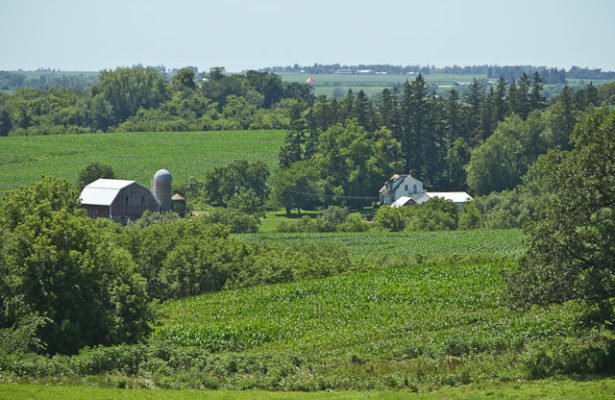
At age 14 I asked a neighboring farmer, Arne Bjugan, who had a much larger operation, for a job as his hired man and I then moved away from home. (See Arne Bjugan’s farm above) I worked my four high school years doing the morning and evening milkings during school days and working 12-14 hours on other days. On Sundays I had the rest of the day off after finishing the morning milking.
Later when I attended the University of Minnesota, I worked summers at the U of M research farm, mostly doing the things the full-time workers didn’t want to do like pulling weeds in research-crop fields and putting up thousands of bales of alfalfa hay.
Then after more job experiences, I had a chance to partner with my first in-laws to ranch sheep and cattle in the mountains of Northern California. This was real back country ranching, 30 miles (1 1/2 hours) from town, with no electricity, but with wood and propane for heat, cooking, refrigeration, house lights and hot water heater. During February/March lambing season, I’d get up three times during the night to find ewes in all phases of lambing, half-dead lambs (probably the first of twins) and I’d pick them up, carry them back to the house and start the wood cook stove, drop the oven door and put them on a towel in a cardboard box to warm up. I always took advantage of ewes who had lost their lambs to carefully milk them to get that magic ingredient, colostrum milk, then freeze it in ice cube trays to save for times such as these. I’d pull one ice cube worth of colostrum, warm it up then use a plastic (needleless) syringe to trickle the colostrum down the lamb’s throat while stroking its throat so it would swallow. As if by magic, most of these little lost causes would struggle in the cardboard box, then lay up straight, then try to stand. That’s when I’d try to bring the lamb up to my rows of 4’x4’ lambing pens and try to get a lactating lambless ewe to “adopt” this orphan. Hint: there are many ways to try to achieve this and I tried them all.
BTW, I remember the 1960s “Freeman Acres” joke that even farmers thought was humorous, that being that Secretary of Agriculture Orville Freeman (under Kennedy and Johnson) backed an act that allowed farmers subsidies to let certain farmland remain fallow. It made about as much sense to farmers as it did to other tax payers.
An even bigger scandal, IMHO, is the ethanol subsidies on corn which was a program that was brought about because environmentalists convinced enough of the public and hence congress that corn ethanol was a more environmentally friendly substitute for oil-based petroleum. Hence they bolstered the price of corn ethanol over the cost of production to make sure that enough of the valuable food-capable farmland in America was subverted for the ethanol market. For those not familiar with the feeding frenzy of corn, it takes a lot of petroleum to make enough fertilizer to grow the hungry corn plant and that costs the farmer lots of money.
In the general farming community I lived, crop rotation was practiced (along with strip farming that minimized erosion on sidehills by dividing big fields into horizontal strips). Crop rotation went something like this, after a heavy soil-feeding corn crop was harvested, grain with alfalfa was planted the next spring. The grain crop (oats, wheat, barley, rye) would ripen in later summer and be harvested. Being an annual, the grain plant was now dead, but the alfalfa was just getting going, and it being a perennial after having been given “cover” by the grain was now mature enough to survive that first and subsequent winters. Then for two or maybe three years alfalfa hay, two or three cuttings per summer in Minnesota, would slowly add nitrogen to the soil because it was a legume (like soybeans). Finally corn would be planted on that ground for one year to use that nitrogen, plus more added nitrogen, phosphorus and potassium. Then the cycle would be repeated.
When I drove from Minnesota to Oshkosh in 2015 for the EAA AirVenture and Burt Rutan’s 40th anniversary there, all I saw in the fields of Minnesota and Wisconsin was corn. The ethanol subsidies had changed everything. Now added fertilizers were mandatory to keep the heaviest of soil feeders, corn, growing for ethanol.
Anyway, Bill’s knowledge of the various farm bonuses, subsidies in particular, is commendable.