
So, when we last met, I said that we would get to our boy Constantine.
And boy howdy, we are!
First, a little bit of housekeeping. We’re dealing with an era where everyone had the same few names it seems. So, the cast of characters is this:
Flavy-Flav — Flavius Valerius Constantinus the Father of Constantine the Great
Dio — Diocletian the Douchecanoe, Emperor of Rome
Max-Man — Maximian, Dio’s junior co-Emperor
Gal — Galerius, Flavy-Flav’s co-junior Emperor
Sev — Valerius Severus, a junior Emperor once Max-Man and Flavy-Flav became Senior Emperors
Minmax — Maximinus Daza, a junior Emperor with Sev
Max-T — Maxentius, son of Max-Man, who didn’t like Sev at all
The Big C — Constantine the Great
Licey — Licinius, a co-Emperor with The Big C for a time and the guy who wrote the Edict of Milan with him
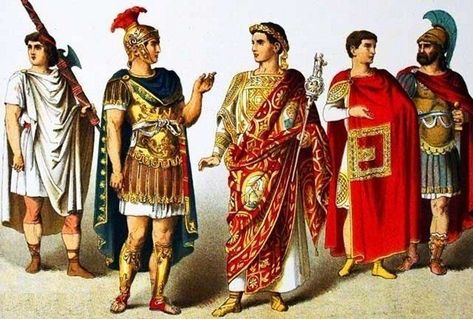 Why did everyone need to have the same few names? I’ll bet everyone having the same name had something to do with all the wars that broke out.
The Big C was born to a Greek Christian mother (Helena) and a Roman father who had been part of the Tetrarchy. The Tetrarchy was an attempt to make the very large, very complex, very gi-freaking-normous Empire a little less of an unwieldy kludge. And, it worked okay for a little while. Basically, there was a Senior Emperor who ruled the Eastern section of the Empire (Dio the Douchecanoe being the first) and a Junior Emperor who ruled the West (Max-Man). The Emperors appointed their own successors. Dio and Max appointed Gal and Flavy-Flav (Constantine’s dad) to Junior Emperors. When they Dio and Max retired, Gal and Flavy-Flav became Senior Emperors and appointed Sev and Minmax to be junior Emperors.
However, when Flavy-Flav died and The Big C was proclaimed to be both Senior and Junior Emperor by his dad’s army, things got dicey. It didn’t help at all that Minmax’s own son, Max-T disliked his dad’s co-Emperor Sev. When Minmax retired, he named Max-T to be junior Emperor. Sev bowed out in 307 and Max-T and The Big C were proclaimed to be Seniors by Max-Man. Meanwhile, Gal, who was just chilling out, appointed Licey to be the Senior in the West and Minmax to be Senior in the East.
 A Not Inaccurate Depiction of What Happens When You Have Four Emperors
Four Senior Emperors does not a stable government make. That’s way too many chiefs and not enough Indians. So, the four Emperors did what men with armies have done — they sat down and discussed their differences rationally and then came to an agreement.
 If you believe that… well, here’s this bridge for sale…
Yeah. Right. No, they went to war. The Big C was fighting Max-T for control over the Western Empire while Licey chilled and ruled in the East after Minmax died. The Big C and his armies were gathering to throw down with Max-T and his armies near the Tiber at a bridge called the Milvian Bridge. It was late October. The armies were preparing for battle. The Big C has a vision from The Biggest C (Christ) that tells him if he fights under The Biggest C’s sign, he’ll win.
So The Big C does what anyone would do if The Biggest C told them that: he ordered his men to paint this on their shields and to know that the Christian God was on their side.

Guess who won the battle of Milvian Bridge? 😉
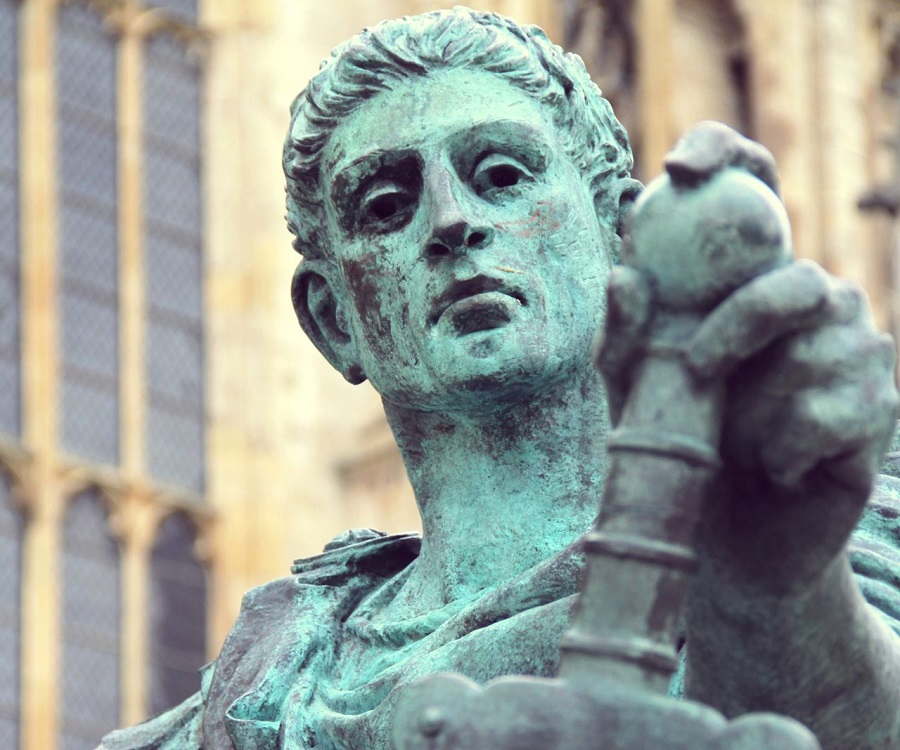 Duh. Who did you think won?
So, with Max-T out of the picture, The Big C rules the Western half of the Roman Empire exclusively, with no co-Emperor in the West, from 312 to 324. The Big C and Licey wrote the Edict of Milan in 313, which ended the persecution of Christians in the Roman Empire and granted them official toleration. However, that was probably the last time the two agreed on anything. In 314, The Big C went after Licey because he thought that Licey was hiding Senecio (who wanted to overthrow the Big C). The Big C won that war and he and Licey tired very hard not to piss each other off. However, Licey had to go and appoint a co-Emperor for himself: Valerius Valens.
That did not sit well with The Big C. We’re talking it flew like a lead balloon (and not the cool one that Mythbusters made). The Big C invaded the Balkans and wiped the floor with Licey at the Battle of Cibalae. Licey fled south all the way to Adrianople and then tried to smooth things over with The Big C. However, our boy Constantine wasn’t about to surrender victory to the jaws of defeat and told Licey to get bent and marched on him, resulting in the Battle of Mardia. The Big C let anger get the better of him and this battle was kind of a stalemate. Licey and The Big C came to terms where Licey agreed that The Big C was the boss of all of Rome and of him and The Big C agreed to let Licey keep Thrace to rule. Licey also agreed to put a cap in Valens.
Things settled down for about seven years until the Sarmatians started causing problems. Licey had been dealing with them for a while but they crossed the Danube into The Big C’s turf and started wrecking stuff. Of course, our boy Constantine got ticked off and went after them. He crossed the Danube chasing them which meant that, technically, he had invaded Licey’s turf. Again.
 Oops! My bad!
Oh well.
The Big C followed this up with another invasion, sending the Goths into Thrace. Licey pointed out that The Big C had broken their agreement and war broke out again in 323. The Big C proceeded to roll up Licey’s forces at the Battle of Adrianople, forcing Licey to flee to Byzantium and hide behind its walls. Our boy Constantine then proceeded to beat the tar out of Licey’s fleet, which was supposed to be a really good fleet, at the Battle of the Hellespont. The final fight of this war was the Battle of Chrysopolis where Licey got his rear end handed to him. The Big C’s sister, who was married to Licey, begged her big bro to spare her husband so into exile Licey went with Constantine being the Sole Boss of All of Rome.
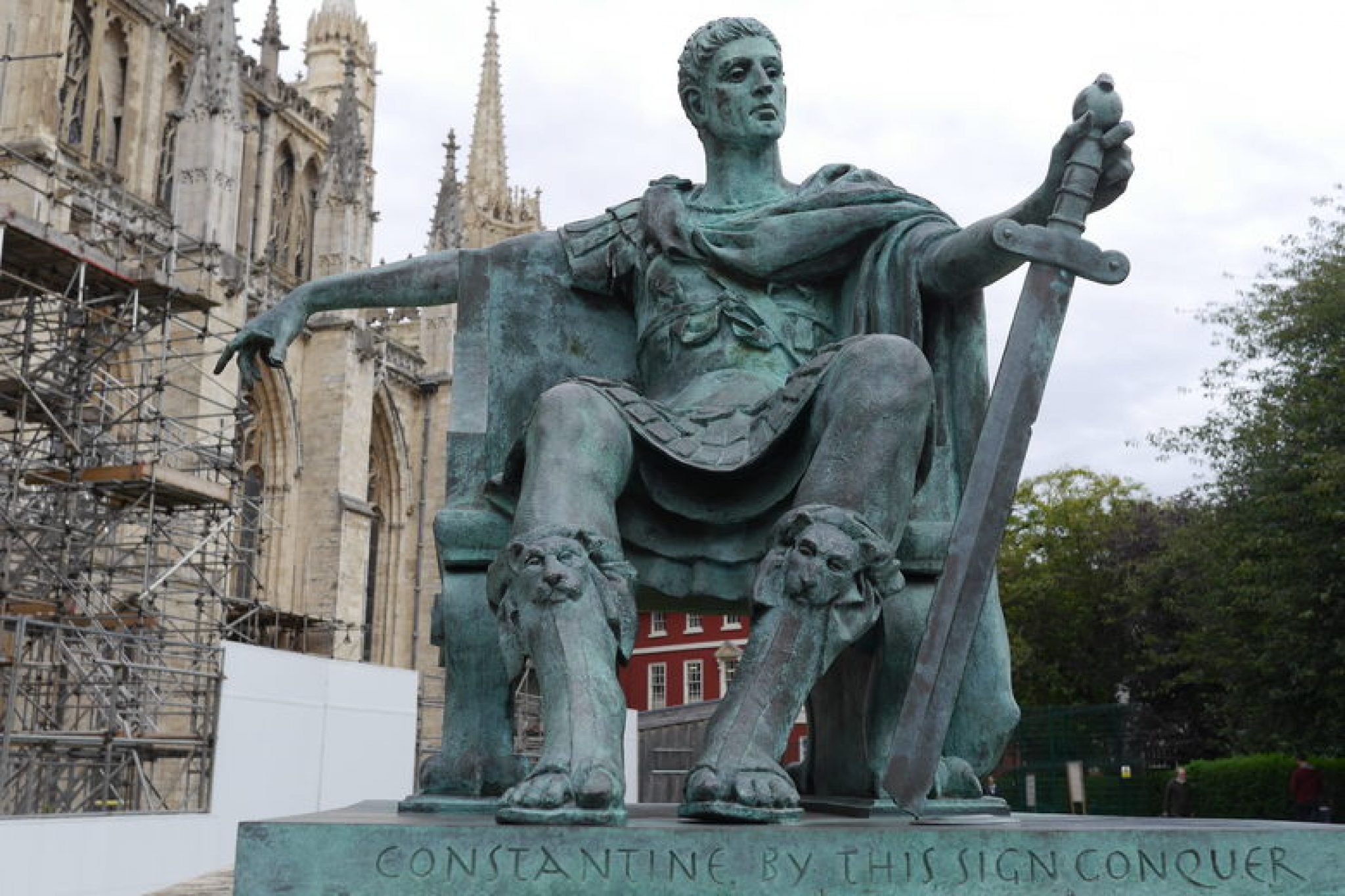 It’s Good to Be The Big C
But the Big C didn’t just chill and rest on his laurels. No, he had a city to build.
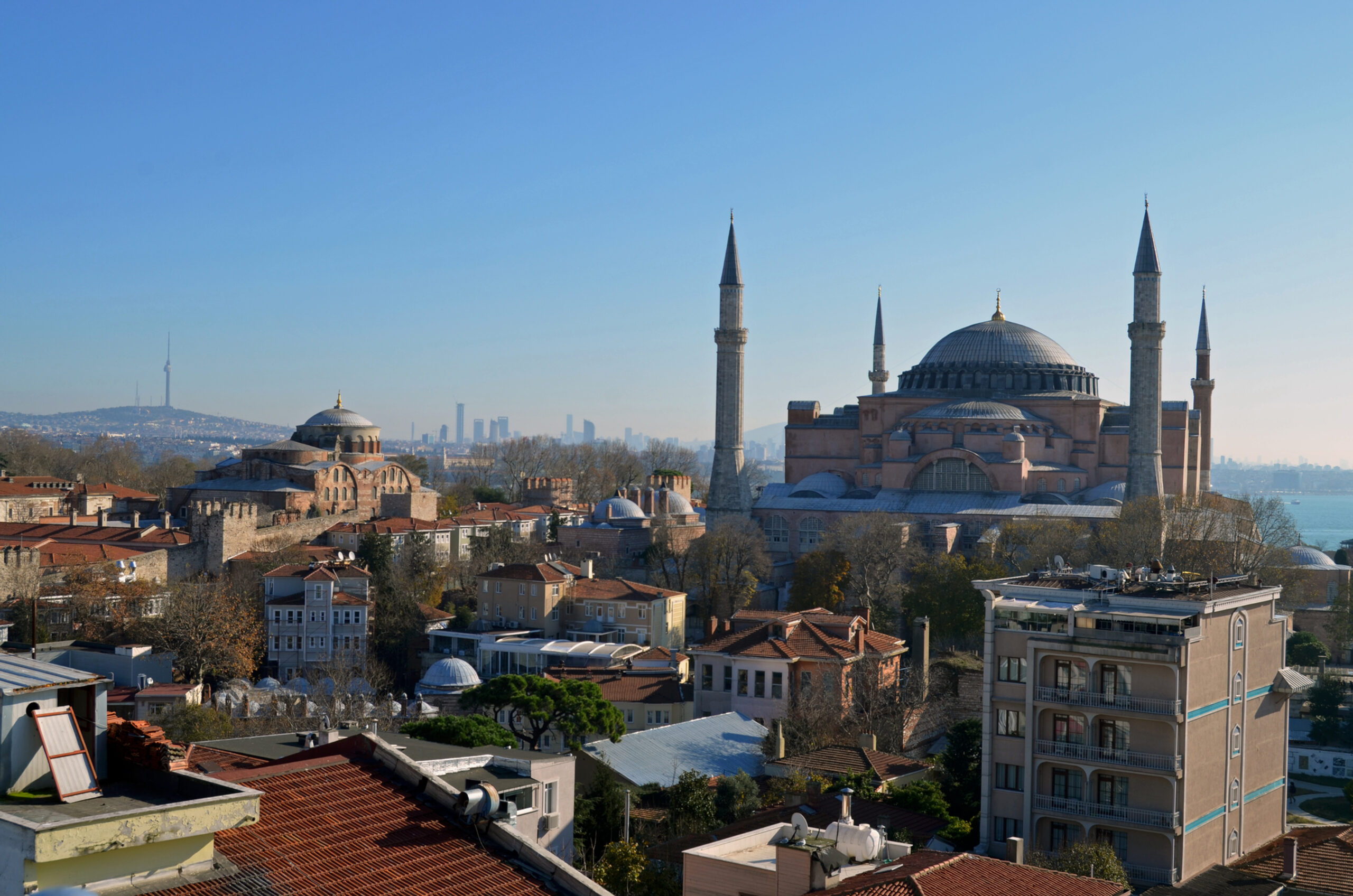 It’s Constantinople and I will die on this hill
But we’ll get to that next time.
— G.K.
The next post in this series is available here!
4 replies on “Byzantium — Signs, Co-Emperors, and Confusion”
Ok, on this one I knew about 20% off your posting. Mainly the big battlles, who won and the receiving of the sign. Thanks again about the info.
And I like your sense of humor. It reminds me somewhat of mine.
You poor, poor thing!😆
I’ve been told that “smart ass” is my native language by enough people that I’m like “Cool. Might as well embrace it, then.” 😉 Also, I’ve found that the best way to learn or to teach something is to make it both hilarious and memorable. For instance, I remember some stupid equation from high school chemistry that is Pv = NRT because the teacher said “just remember that perverts are nert.” No clue what the equation is used for or what the variables are anymore, but I remember the equation itself!
I think I’m going to take a break this weekend to work on stories and stuff and then come back Monday with the actual history of moving the seat of the Empire East.
— G.K.
P v=NRT. Right up my alley. Used in my Chemical Engineering degree. (Along with Bernoullis equation. Don’t worry about it. Almost nobody else even cares,)
If you don’t want to know anything about it, stop here.
Warning! Warning! Warning!
Engineer geeking out about explaining something. No intent to bore or mansplain.
P= Pressure of gas. V= volume of gas. N=is number of something called moles of gas. Think molecules. R=a constant. Value depends on how you measure volume, temperature and pressure. T=temperature. Kelvin or Rankin. Kelvin is centigrade with zero at absolute zero (-273.15 centigrade) Rankin is Fahrenheit with zero at absolute zero; -458.67 Fahrenheit. If you know all but one variable, you can find the one missing with this.
Hello? You asleep? Darn.
I did warn you.
And one of my mottos is: I am not normal. Normal is boring. My favorite is : If you can laugh at yourself; you will never cease to be amused.
And if you think I’m going to explain Bernoullies equation, forget it!
Take this as you will!
Cool. I will probably never use that equation considering I work in cybersecurity and write fantasy in my free time but it’s nice to know what it means again. 😉
— G.K.