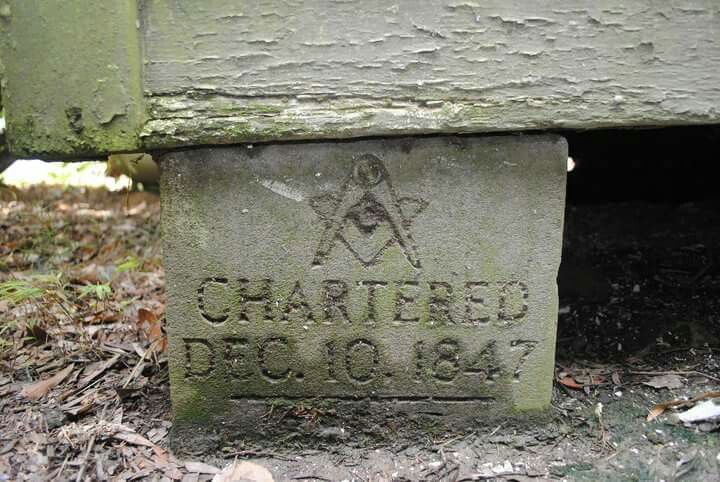
Bill recently made a comment about the Freemasons that made my eye twitch. Those of us who are displeased with the “Progressive” takeover of the culture and the national narrative should take a much more critical view of the organization and its influences. Why? Let’s first take a bit of a trip down memory lane.
Firstly, it needs to be said that the modern Freemason organization has nothing whatsoever to do with the medieval stonemason guilds. They are not descendants or extensions of them (despite modern Masons’ fanciful insistence otherwise). The Freemasonry we know today began in the early 1700s as a club for Enlightenment elites (much like Yale’s “Skull and Bones” club).
Secondly, and this is where this thesis is going: Freemasonry is responsible for the lamentable situation in which we currently find the world. Masonic philosophy both created some trends and propagated other trends that have come to result in the very things we’re complaining about destroying Western Civilization; namely, secular humanism, socialism, “Progressivism,” and a general philosophy that a “properly educated” elite are capable of reordering society over the objections of the hoi polloi for “the greater good” (which, of course, they get to define). I know that sounds like hyperbole, but it’s not, and there’s an important reason why such an extreme statement is the case.
Modern Freemasonry initially provided a “safe space” for those with enough education to engage in philosophical debate and theorizing with Enlightenment ideals that were often seen as threats to the established monarchial and religious orders in an age when “freedom of speech” did not exist. Think of it as the Enlightenment’s version of the “Intellectual Dark Web” that most of us are familiar with. So far, nothing too bad.
By the second or third generation, the Masons had begun doing what we’ve seen academic elites do in our own time — they came to believe that they had a better theory for how to order society, but enacting those Enlightenment ideals necessitated sweeping aside the old orders with which they conflicted. By the time of the American Revolution, some Masons were ready to attempt implementation of the Enlightenment ideal of radical egalitarianism. This involved setting up the first modern republic and one devoid of an aristocracy (in theory if not in practice).
This did not end in disaster for several reasons, but all are related to the limited scope of the implementation. First, while they designed a republican form of government and abolished the aristocracy, they didn’t go so far as to claim that monarchy was illegitimate or obsolete. Second, they left in place the central pillar of Western Civilization: the Christian religion (in fact, they enshrined it and relied upon it). They merely argued that monarchic authority had its limits, and that the British monarchy had exceeded those limits by levying abuses on its colonists in America. They never claimed that the British monarchy was illegitimate or should be overthrown in general — just that it had proven itself unsuitable for governing the colonies of the New World. They didn’t even argue that the British treatment of colonies full of non-Western subjects was equally egregious (mostly because they saw the inheritors of Western, Christian civilization capable of governing themselves in ways that the non-Western peoples were not).
After the success of the American Revolution, however, European Masonry continued to develop its already radical ideas into a radicalism of fever-pitch. We saw the worst excesses in antimonarchist and anticlerical Masonic thought implemented in the French Revolution. There, proponents of these ideals advanced a “year zero” approach (something we commonly see with radical Progressivism/Fascism/Leftistism throughout its history).
They declared not that a distant monarch was guilty of administrative abuses, but that the monarchy itself — THEIR monarchy — was obsolete and evil and should be abolished utterly. They swept aside their own cultural patrimony. While the British colonists in America recognized and affirmed the goodness of their own British patrimony and the millennia of Classical philosophy that informed it, the French sought to bring about an end to French history and to reinvent their entire society. They did not spare the Church, either, which was one of the central pillars and stabilizing influences on the society. They literally rewrote the calendar (along with all weights and measures) to begin anew with the revolution rather than the birth of Christ.
Not only that, the new French government (as several future French republican governments would do), declared that ALL monarchy was de facto illegitimate. They swore military aid to any European faction that wished to overthrow its own monarchy as part of the establishment of a “brotherhood of all mankind.” They envisioned a Europe given over fully to republicanism and then to be united in a single supranational republic as all the elements of Western Civilization that gave rise to national distinctions were swept into the dustbin of history. They would be quite pleased with the EU project and in full agreement of its trending toward a further consolidation of power into a European superstate.
The Church was regarded as but one more such monarchy, and one whose influence extended beyond its own area of temporal authority, and so it, above all other European monarchies, needed to be toppled and abolished. While the American revolutionaries sought to harness the stabilizing influence of the Christian religion and render un-bloody the denominational differences between the groups, the French sought to sweep it all away and replace it with a new state-paganism (for those too “superstitious” to abandon religion entirely). Thus was born secular humanism.
While we’ve seen that Great Terrors and Bonaparte demagogues are natural outgrowths of such radical Leftist movements throughout the past two centuries, the Europeans were caught off-guard (literally and figuratively). Once Napoleon was dealt with, European history has been one council of Masonic-ideal-inspired eggheads after another attempting to reorder society and making things worse. The Congress of Vienna was the first of these in the modern age. The artificial order imposed by those idealistic elites drawing arbitrary lines on a map and setting up dynasties as they saw fit gave immediate rise to the revolutions of 1848-52, and, in turn, WWI (including the Russian Revolution). Of course, the Treaty of Versailles after WWI would give rise to four more ills: the League of Nations (more eggheads), the strife in the Balkans, WWII, and the modern Middle East. Still more such ills would follow from the resolutions of WWII: the United Nations, the Cold War, and the proliferation of postmodernism (leading directly to the cultural revolution of the 60s that provoked the massive and lamentable destabilizations of Western Civilization, the Catholic Church, and mainline Protestantism).
What’s more, thanks to the French Revolution, the Masonic ideals were now popular with the general European public — including those who might themselves not have been Masons. Without European Masonry giving rise to the French Revolution in the 1792-97, there would have been no Marx. Without Marx and the Masonic Italian Unification from 1848-71 (part of the broader revolutions begun between 1848-52), there would be no Gramsci. Without them, there would have been no Lenin, and without Lenin there would have been no Mao. What’s more, without the popularity of those ideals, there would have been no Wilson, Roosevelt, Johnson, or the modern party platform of the Democrats.
I encourage you to take a look at the following document — a general plan circulated among the Masonic lodges of Italy in the run up to the Italian Unification movement in the mid-1800s. Read it and ask yourself what part of the plan or attitude could not have been written by Saul Alinsky. Then, ask yourself what of their designs hasn’t been achieved by now. There’s a reason why the Catholic Church has maintained almost from the start that anyone who joins the Masons incurs latæ senteniæ excommunication (i.e. “automatic excommunication”).
The Freemasonry that began in the 1700s finds its logical conclusion today in secular humanism, militant atheism, postmodernism, “Progressivism,” and socialism/communism.
PERMANENT INSTRUCTION OF THE ALTA VENDITA
“Piccolo Tigre”
(Published in 1859 in Italian and 1885 in English — ostensibly written in the early 1840s or late 1830s.)
Ever since we have established ourselves as a body of action, and that order has commenced to reign in the bosom of the most distant lodge, as in that one nearest the centre of action, there is one thought which has profoundly occupied the men who aspire to universal regeneration. That is the thought of the enfranchisement of Italy, from which must one day come the enfranchisement of the entire world, the fraternal republic, and the harmony of humanity. That thought has not yet been seized upon by our brethren beyond the Alps. They believe that revolutionary Italy can only conspire in the shade, deal some strokes of the poinard to sbirri and traitors, and tranquilly undergo the yoke of events which take place beyond the Alps for Italy, but without Italy. This error has been fatal to us on many occasions. It is not necessary to combat it with phrases which would be only to propagate it. It is necessary to kill it by facts. Thus, amidst the cares which have the privilege of agitating the minds of the most vigorous of our lodges, there is one which we ought never forget.
The Papacy has at all times exercised a decisive action upon the affairs of Italy. By the hands, by the voices, by the pens, by the hearts of its innumerable bishops, priests, monks, nuns, and people in all latitudes, the Papacy finds devotedness without end ready for martyrdom, and that to enthusiasm. Everywhere, whenever it pleases to call upon them, it has friends ready to die or lose all for its cause. This is an immense leverage which the Popes alone have been able to appreciate to its full power, and as yet they have used it only to a certain extent. Today there is no question of reconstituting for ourselves that power, the prestige of which is for the moment weakened. Our final end is that of Voltaire and of the French Revolution, the destruction for ever of Catholicism and even of the Christian idea which, if left standing on the ruins of Rome, would be the resuscitation of Christianity later on. But to attain more certainly that result, and not prepare ourselves with gaiety of heart for reverses which adjourn indefinitely, or compromise for ages, the success of a good cause, we must not pay attention to those braggarts of Frenchmen, those cloudy Germans, those melancholy Englishmen, all of whom imagine they can kill Catholicism, now with an impure song, then with an illogical deduction; at another time, with a sarcasm smuggled in like the cottons of Great Britain. Catholicism has a life much more tenacious than that. It has seen the most implacable, the most terrible adversaries; and it has often had the malignant pleasure of throwing holy water on the tombs of the most enraged. Let us permit, then, our brethren of these countries to give themselves up to the sterile intemperance of their anti-Catholic zeal. Let them even mock at our Madonnas and our apparent devotion. With this passport we can conspire at our ease, and arrive little by little at the end we have in view.
Now the Papacy has been for seventeen centuries inherent to the history of Italy. Italy cannot breathe or move without the permission of the Supreme Pastor. With him she has the hundred arms of Briareus, without him she is condemned to a pitiable impotence. She has nothing but divisions to foment, hatreds to break out, and hostilities to manifest themselves from the highest chain of the Alps to the lowest of the Appenines. We cannot desire such a state of things. It is necessary, then, to seek a remedy for that situation. The remedy is found. The Pope, whoever he may be, will never come to the secret societies. It is for the secret societies to come first to the Church, in the resolve to conquer the two.
The work which we have undertaken is not the work of a day, nor of a month, nor of a year. It may last many years, a century perhaps, but in our ranks the soldier dies and the fight continues.
We do not mean to win the Popes to our cause, to make them neophytes of our principles, and propagators of our ideas. That would be a ridiculous dream, no matter in what manner events may turn. Should cardinals or prelates, for example, enter, willingly or by surprise, in some manner, into a part of our secrets, it would be by no means a motive to desire their elevation to the See of Peter. That elevation would destroy us. Ambition alone would bring them to apostasy from us. The needs of power would force them to immolate us. That which we ought to demand, that which we should seek and expect, as the Jews expected the Messiah, is a Pope according to our wants. Alexander VI, with all his private crimes, would not suit us, for he never erred in religious matters. Clement XIV, on the contrary, would suit us from head to foot. Borgia was a libertine, a true sensualist of the eighteenth century strayed into the fifteenth. He has been anathematized, notwithstanding his vices, by all the voices of philosophy and incredulity, and he owes that anathema to the vigour with which he defended the Church. Ganganelli gave himself over, bound hand and foot, to the ministers of the Bourbons, who made him afraid, and to the incredulous who celebrated his tolerance, and Ganganelli is become a very great Pope. He is almost in the same condition that it is necessary for us to find another, if that be yet possible. With that we should march more surely to the attack upon the Church than with the pamphlets of our brethren in France, or even with the gold of England. Do you wish to know the reason? It is because by that we should have no more need of the vinegar of Hannibal, no more need the powder of cannon, no more need even of our arms. We have the little finger of the successor of St. Peter engaged in the plot, and that little finger is of more value for our crusade than all the Innocents, the Urbans, and the St. Bernards of Christianity.
We do not doubt that we shall arrive at that supreme term of all our efforts; but when? but how? The unknown does not yet manifest itself. Nevertheless, as nothing should separate us from the plan traced out; as, on the contrary, all things should tend to it, as if success were to crown the work scarcely sketched out tomorrow, we wish in this instruction which must rest a secret for the simple initiated, to give to those of the Supreme-Lodge, councils with which they should enlighten the universality of the brethren, under the form of an instruction or memorandum. It is of special importance, and because of a discretion, the motives of which are transparent, never to permit it to be felt that these counsels are orders emanating from the Alta Vendita. The clergy is put too much in peril by it, that one can at the present hour permit oneself to play with it, as with one of these small affairs or of these little princes upon which one need but blow to cause them to disappear.
Little can be done with those old cardinals or with those prelates, whose character is very decided. It is necessary to leave them as we find them, incorrigible, in the school of Consalvi, and draw from our magazines of popularity or unpopularity the arms which will render useful or ridiculous the power in their hands. A word which one can ably invent and which one has the art to spread amongst certain honourable chosen families by whose means it descends into the cafes, and from the cafes into the streets; a word can sometimes kill a man. If a prelate comes to Rome to exercise some public function from the depths of the provinces, know presently his character, his antecedents, his qualities, his defects above all things. If he is in advance, a declared enemy, an Albani, a Pallotta. a Bernetti, a Della Genga, a Riverola? Envelope him in all the snares which you can place beneath his feet; create for him one of those reputations which will frighten little children and old women; paint him cruel and sanguinary; recount, regarding him, some traits of cruelty which can be easily engraved in the minds of the people. When foreign journals shall gather for us these recitals, which they will embellish in their turn, (inevitably because of their respect for truth) show, or rather cause to be shown, by some respectable fool those papers where the names and the excesses of’ the personages implicated are related. As France and England, so Italy will never be wanting in facile pens which know how to employ themselves in these lies so useful to the good cause. With a newspaper, the language of which they do not understand, but in which they will see the name of their delegate or judge, the people have no need of other proofs. They are in the infancy of liberalism; they believe in liberals, as, later on, they will believe in us, not knowing very well why.
Crush the enemy whoever he may be; crush the powerful by means of lies and calumnies; but especially crush him in the egg. It is to the youth we must go, it is that which we must seduce; it is that which we must bring under the banner of the secret societies. In order to advance by steps, calculated but sure, in that perilous way, two things are of the first necessity. You ought have the air of being simple as doves, but you must be prudent as the serpent. Your fathers, your children, your wives themselves, ought always be ignorant of the secret which you carry in your bosoms. If it pleases you, in order the better to deceive the inquisitorial eye, to go often to confession, you are, as by right authorised, to preserve the most absolute silence regarding these things. You know that the least revelation, that the slightest indication escaped from you in the tribunal of penance, or elsewhere, can bring on great calamities, and that the sentence of death is already pronounced upon the revealer, whether voluntary or involuntary.
Now then, in order to secure to us a Pope in the manner required, it is necessary to fashion for that Pope a generation worthy of the reign of which we dream. Leave on one side old age and middle life, go to the youth, and, if possible, even to infancy. Never speak in their presence a word of impiety or impurity, Maxima debetur puero reverentia. Never forget these words of the poet for they will preserve you from licences which it is absolutely essential to guard against for the good of the cause. In order to reap profit at the home of each family, in order to give yourself the right of asylum at the domestic hearth, you ought to present yourself with all the appearance of a man grave and moral. Once your reputation is established in the colleges, in the gymnasiums, in the universities, and in the seminaries-once that you shall have captivated the confidence of professors and students, so act that those who are principally engaged in the ecclesiastical state should love to seek your conversation. Nourish their souls with the splendours of ancient Papal Rome. There is always at the bottom of the Italian heart a regret for Republican Rome. Excite, enkindle those natures so full of warmth and of patriotic fire. Offer them at first, but always in secret, inoffensive books, poetry resplendent with national emphasis; then little by little you will bring your disciples to the degree of cooking desired. When upon all the points of the ecclesiastical state at once, this daily work shall have spread our ideas as the light, then you will be able to appreciate the wisdom of the counsel in which we take the initiative.
Events, which in our opinion, precipitate themselves too rapidly, go necessarily in a few months’ time to bring on an intervention of Austria. There are fools who in the lightness of their hearts please themselves in casting others into the midst of perils, and, meanwhile, there are fools who at a given hour drag en even wise men. The revolution which they meditate in Italy will only end in misfortunes and persecutions. Nothing is ripe, neither the men nor the things, and nothing shall be for a long time yet; but from these evils you can easily draw one new chord, and cause it to vibrate in the hearts of the young clergy. That is the hatred of the stranger. Cause the German to become ridiculous and odious even before his foreseen entry. With the idea of the Pontifical supremacy, mix always the old memories of the wars of the priesthood and the Empire. Awaken the smouldering passions of the Guelphs and the Ghibellines, and thus you will obtain for yourselves the reputation of good Catholics and pure patriots.
That reputation will open the way for our doctrines to pass to the bosoms of the young clergy, and go even to the depths of convents. In a few years the young clergy will have, by the force of events, invaded all the functions. They will govern, administer, and judge. They will form the council of the Sovereign. They will be called upon to choose the Pontiff who will reign; and that Pontiff, like the greater part of his contemporaries, will be necessarily imbued with the Italian and humanitarian principles which we are about to put in circulation. It is a little grain of mustard which we place in the earth, but the sun of justice will develop it even to be a great power; and you will see one day what a rich harvest that little seed will produce.
In the way which we trace for our brethren there are found great obstacles to conquer, difficulties of more than one kind to surmount. They will be overcome by experience and by perspicacity; but the end is beautiful. What does it matter to put all the sails to the wind in order to attain it. You wish to revolutionize Italy? Seek out the Pope of whom we give the portrait. You wish to establish the reign of the elect upon the throne of the prostitute of Babylon? Let the clergy march under your banner in the belief always that they march under the banner of the Apostolic Keys. You wish to cause the last vestige of tyranny and of oppression to disappear? Lay your nets like Simon Barjona. Lay them in the depths of sacristies, seminaries, and convents, rather than in the depths of the sea, and if you will precipitate nothing you will give yourself a draught of fishes more miraculous than his. The fisher of fishes will become a fisher of men. You will bring your-selves as friends around the Apostolic Chair. You will have fished up a Revolution in Tiara and Cope, marching with Cross and banner — a Revolution which it will need but to be spurred on a little to put the four quarters of the world on fire.
Let each act of your life tend then to discover the Philosopher’s Stone. The alchemists of the middle ages lost their time and the gold of their dupes in the quest of this dream. That of the secret societies will be accomplished for the most simple of reasons, because it is based on the passions of man. Let us not be discouraged then by a check, a reverse, or a defeat. Let us prepare our arms in the silence of the lodges, dress our batteries, flatter all passions the most evil and the most generous, and all lead us to think that our plans will succeed one day above even our most improbable calculations.
6 replies on “Masonry Cut the Building Blocks of All the Ills We’re Fighting Against”
Although I agree that Continental European Freemasonry is very much part of the revolutionary/radical history of Europe I would take issue with some of your post.
Firstly, Masonic lodges as we know them in the English-speaking world demonstrably go back all through the 17th and into the 16th century. The Scottish lodge known as “Mother Kilwinning” has written records dating from 1599 and there are masonic writings older than that. We know from his own diary that Ellias Ashmole, father of Oxford’s Ashmolean Museum, was initiated into a lodge in 1646. The organisational structure of Grand Lodge does date from 1717, but Freemasonry was over a century old by then. It’s hard to know just how much overlap there was between the actual “operative” craft lodges of stone masons and the “speculative” lodges formed by gentlemen but it seems far from fanciful to suppose that there was at least some.
Secondly, talking about Freemasonry as if it is, and was a monolithic structure is misleading. It has had splits and disagreements and has different jurisdictions. In particular I would draw a line between Masonry in the Anglosphere and European Masonry. As Bill has pointed out the political tradition of the US, UK and other English-speaking countries is more liberal (in the true sense of the word) than most of Europe. On the Continent Masonic lodges were certainly involved in rebellion s and plots against autocratic regimes. There were many bodies in Europe using Masonic structure, often casually referred to as Masonic, that were never recognized by the English or Scots Grand Lodges.
Masons were on both sides of the Revolutionary War, famously Paul Revere, Franklin and Washington were Masons, but so was Lord Cornwallis, who surrendered Yorktown. Ralph Abercrombie was another British general and Mason who actually refused to go to fight against the Americans. He died in 1801 at the end of his successful campaign to throw the French army out of Egypt.
Freemasonry was much more “establishment” in Britain and America than it was in Europe, especially the south. Washington was the first of 14 US Presidents to be Freemasons, the last was Ford. In Britain George IV, William IV, Edward VII, Edward VIII and George VI were all Masons, as is Prince Philip. Churchill was a Freemason, the last British Prime Minister to be so. Archbishop Fisher, who officiated at The Queen’s coronation, was a Mason, no Archbishop of Canterbury has been since.
If anything, I would say here in the UK that the undoubted “Progressive” takeover of the culture and the national narrative coincides with the withering of Freemasonry and its retreat from national life. I would lay good money there are fewer Masons at senior levels of all areas of public life in the US now than there were forty years ago. It’s certainly the case here. Although it’s not banned in the police there were moves under Tony B Liar’s government to make it obligatory in the police and the legal profession to declare membership.
I have seen Freemasonry attacked from all sorts of angles, it’s apparently at one and the same time a tool of Satanism, Atheism, Capitalism, Communism, Zionism and the British Empire.
Here’s a brief summary of historic and contemporary actions against Freemasonry.
Banned in Franco’s Spain 1940 (minimum sentence 12 years, maximum, death).
Banned in Mussolini’s Italy 1925.
Banned in National Socialist Germany and throughout the territories it controlled. Specifically condemned in Mein Kampf. Outlawed under the Enabling Act of 1933. Hermann Göring said. “in National Socialist Germany, there is no place for Freemasonry”. Suppression of Freemasonry was the job of the Gestapo’s section B3. Masons in the camps wore the inverted red triangle. It’s hard to know exactly how many Masons died in the camps but it’s thought to be between 100,000 and 200,000.
Banned in Imperial Russia 1822. Briefly revived after the February revolution 1917. Supressed by the Bolsheviks after the October revolution 1917 and formally banned in the Soviet Union in 1922. The first legal lodges were formed again in Russia in 1992/3.
Banned in People’s Republic of China. Masonry is still hanging on in Hong Kong for now; and is fully legal in Taiwan.
After a brief post war revival in Hungary and Czechoslovakia it was supressed again 1950, being condemned in communist Hungary as “a meeting places of the enemies of the people’s democratic republic, of capitalistic elements, and of the adherents of Western imperialism.”
Subject to pressure in Japan from 1937. The Japanese representative at the Welt-Dienst congress in 1938 said. “Judeo-Masonry is forcing the Chinese to turn China into a spearhead for an attack on Japan, and thereby forcing Japan to defend herself against this threat. Japan is at war not with China but with Freemasonry.” On the 8th December 1941 the Japanese government seized all the assets and properties held by Masonic lodges in Japan.
Banned in Iraq following the 1958 revolution. In 1980 by Saddam Hussein brought in the death penalty for those who. “promote or acclaim Zionist principles, including Freemasonry, or who associate with Zionist organizations.”
Banned in Iran after the Islamic revolution in 1979. Iranian lodges in exile operate in the USA and France.
Banned by Hamas. Article 28 of the Hamas Covenant, states that Freemasonry, Rotary, and other similar groups “work in the interest of Zionism and according to its instructions..”
With the notable exceptions of Morocco, Lebanon, Turkey and Malaysia Freemasonry is largely banned through the Moslem world. The first Moslem leader to condemn Masonry was Sultan Mahmud I in the 1730s.
Fascists, Communists and Islamists have all repeatedly condemned Freemasonry, usually in combination with Judaism/Zionism.
Anyone is free to critique Freemasonry of course, but I for one would feel uncomfortable lining up with Lenin, Hitler, Stalin, Tojo, Mao, Saddam Hussein, Ayatollah Khomeini and Hamas against the distinguished and eclectic list of gentlemen here.
Sir Christopher Wren, Lodge of Antiquity No. 2, London
Edmund Burke, Jerusalem Lodge No. 44, London
Benjamin Franklin, St. John’s Lodge, Philadelphia
George Washington, Alexandria Lodge No. 22, Virginia
Lt-Gen. Ralph Abercrombie, Canongate Kilwinning Lodge, No. 2, Edinburgh
General Lewis Armistead, Alexandria-Washington Lodge No. 22, Virginia
General Winfield S. Hancock, U.S. Charity Lodge No. 190, Pennsylvania
Mark Twain, Polar Star Lodge No. 79, St. Louis
Rudyard Kipling, Hope and Perseverance Lodge No. 782, Lahore
Theodore Roosevelt, Matinecock Lodge No. 806, New York
W. C. Fields, E. Coppée Mitchell Lodge No. 605, Philadelphia
Roy Rogers, Hollywood Lodge No. 355, California
Sir Winston Spencer Churchill, Studholme Alliance Lodge No. 1591, London
General Omar Bradley, West Point Lodge No. 877, New York
King George VI, Naval Lodge No. 2612
General Douglas McArthur, Manila Lodge No. 1, Manila
Audie Murphy, North Hollywood Lodge No. 542, California
John Wayne, Marion McDaniel Lodge No. 56, Arizona
Edward “Duke” Ellington, Social Lodge No. 1, Washington, D.C
William “Count” Basie, Wisdom Lodge No. 102, Chicago
Mel Blanc, Mid Day Lodge No. 188, Oregon
Peter Sellers, Chelsea Lodge No 3098, London
Edwin “Buzz” Aldrin, Montclair Lodge No. 144, New Jersey
Rick Wakeman, Chelsea Lodge No. 3098, London
There’s a lot here to unpack, but let me respond to some of your broader points.
I agree that the structure predates 1717, and that there was certainly overlap between the operative and speculative lodges. In fact, I’d say there was a third stage. There was a period of operative lodges that gave way over time to speculative lodges. For a period of about 75 years, some of the speculative “gentleman’s club” lodges became “radical lodges.” This happened when, seeing how masons used some of the structure/organization to plan and carry out the American Revolution decided to “crank it to 11” and perform a more extreme act in France (and in subsequent revolutions up through the 1848-52 uprisings).
It is also true that it is not monolithic. In fact, the “Permanent Instruction of the Alta Vendita” I quoted in full above freely displays the friction between French masonry and Italian masonry.
The Masonic organization(s) played a much more backseat role in the American Revolution (and even the original French Revolution, although it was an extreme form of ideologies originally popularized by the academic elite in the ranks of Masonry that guided that one) compared to the other uprisings and revolutions that would take place in the first half of the 19th century.
As for the withering of Masonry coinciding with the rise of much of the “progressive takeover of culture,” again, I don’t disagree, but that’s correlation, not causation. My thesis is essentially that, because of its ideology, Freemasonry provided fertile ground for radical philosophers and wannabe activists/revolutionaries from the time of the American Revolution through the “Springtime of the Peoples.” After that, they lost control of the snowball they’d started down the hill. While some of that came back to bite the Freemasons on the rear end later on, those radicals would not have cared one bit. For them, Freemasonry was just a convenient and effective vehicle for their activism.
You can think of it in much the same way as how the “counterculture” radicals infiltrated and took over Western Academia. Both academia and public education existed long before their arrival, but their underlying philosophy left them ripe for takeover. Now, the postmodernists and radicals have hollowed them both out so that they are shells of their former selves, and they have damaged them both beyond repair in their current form. While proponents of good public education or those of us with a wistful nostalgia for the academia of yesteryear may lament this state of things, neither the current vandals nor the radicals who began the takeover in the 1930s would care one bit. For them, the institutions were only good things insofar as they could be used to further their ideology and activism; thus, if they must then “die the death” to accomplish those nefarious goals, so be it. That’s how you get professors and college administrators arguing against intellectual freedom and a public school that cares not one whit for providing a practical foundation for career and further study instead of simply brainwashing students with Leftist propaganda.
So, yes, you’ll have some good-minded and beneficent Masons, just as you’ll still manage to get some really good teachers and professors, but we must still recognize that Academia and public education provided, institutionally, an open invitation to the likes of John Dewey and Saul Alinsky — and that makes them, on the whole, toxic.
Without Freemasonry popularizing certain ideas, there would have been no French Revolution, and without the French Revolution, there would have been no Marx, Garibaldi, or Gramsci (actually, Italian masonry played a much more active role in support of Garibaldi). What happened after that was outside of the masons’ direct control, but the institution (and its philosophy) is still to blame for those effects and the effects of those effects. It is an ideological stream that forks several times throughout the 19th and 20th centuries and has produced every negative element we conservatives have been complaining about from the 1960s down to Joe Biden’s most recent executive order and whatever other nonsense just dribbled from the mouth of AOC.
I can’t speak for anyone else’s “education”, but I was never taught these things. I was taught the “sanitized” version of European history.
It wasn’t until a couple of years ago that I read about Albert Pike and his lifelong “tributes” to the Freemasonry.
Then I watched a documentary on how (general) Freemasons aren’t even aware of what goes on at the highest levels, even if one is 33rd degree (which is supposed to be the highest level).
Apparently, one can make it to 33rd degree and still not be privy to the grand scheme of things unless “chosen” by ones peers in the “organization”.
One of the things that stood out was the planned “infiltration” of every level of society and government. Mason first. An oath taken. Upon penalty of death.
There is SO much more we need to have our eyes opened to. The crooked government in the U.S. is a mere “drop in the bucket” of lies, deception, infiltration, and slavery.
Call me tin foil hat, but we’ve seen the deception all over the world. Turncoat politicians, compromised judiciary, jackboot law enforcement, etc.
We can say, “this is happening in the UK, and this in Sweden”, but if you look at the big picture, the SAME thing is happening all over! It starts in one country and eventually spreads to them all!
Have we ever wondered why?
One doesn’t have to think that there’s an upper-eschelon rank of Freemasonry that sits in some smoke-filled back room plotting global domination. It’s enough to know that the ideas that birthed Marxism, Progressivism, and rule-by-technocratic-elite got their start in the philosophy of Masonry in the 1700s and were spread and popularized by the organization in the 1800s.
Part of my doctoral coursework was a deep dive into the revolutions of 1848-52. They were the daughters of the French Revolution, and the French Revolution was the daughter of Freemasonry. The American Revolution was, too, but (as I wrote above), we didn’t try to sweep away Christianity and the entirety of Western Civilization — that’s why we didn’t go down the road Europe did.
Personally, I think that it’s possible for there to have been such a group at the top of Freemasonry in the early days, but it is likely not the case any longer. No, the Masonic organization(s) long ago lost control of the snowball they started down the hill. Even your likely contenders today (Davos, Bilderbergers, etc) are probably not doing what the tinfoil hat crowd imagines. They are just really rich, really powerful people who are true believers in that kind of ideology and who find themselves in positions to actually affect some of their philosophical wish list.
Just a quick perusal of the Masonic document I reprinted above should tell you that even as early as the 1830s/40s, they were already trying to create a situation whereby people (both the peons in the streets as well as powerful people like a pope) simply accepted Masonic ideals as the default position. They wanted activists who would serve their purposes without necessarily being card carrying members of an identifiable organization. In the 20th century, we saw the Leftists do the same with our public school system and academia, and we now see half the “low information voters” in this country uncritically accept Leftist ideals as the “default position” (e.g. climate change is happening, disagreeing with intersectionality equals racism, etc). The Masons had simply done the same thing a century before.
And all those Leftist goals are themselves but the modern incarnations of the 19th century Masonic ones. The Freemasons called it “the Brotherhood of All Mankind,” but today we might call it “globalism.” Both are the privileging of the “macrorelationship” (i.e. the broadest relationship between people) over the “microrelationship” (i.e. the family unit, the church community, etc). The achievement of either requires the same prescription: erode the family bond, erode the community bond (especially the religious ones), and erode the national bond. Only then can the things that make us distinct be eliminated so we can all march into the sunset hand-in-hand singing The International.
Of course, the 19th century Masons would have been in agreement with eliminating the distinct national identities, languages, and religions. Marx took it a step farther and said that even the family provided too safe a haven for the old ideas, and so it also needed to be destroyed. The modern Left goes so far as to say we cannot have even distinctions between the sexes.
It may seem strange that this same Left is stoking tribalist distinctions with their intersectionality approach, but we need to look carefully at that. Their stated goal is one of “equality” and “anti-racism” — a “Brotherhood of All Mankind.” Of course, the Left’s Orwellian use of terminology can’t always be taken at face value, but it is indeed obvious that the Leftists don’t even believe their own intersectional propaganda — they are propagating it for the sole purpose of creating what they see as temporary divisions that will destabilize and destroy the United States. Thus, they are willing to create an unstable set of divisions (utterly unsustainable “intersectionality”) in order to bring down a system of stable divisions (nation-states, free-conscious choice of religions, etc).
Thank you for clarifying. 🙂
I’ve often wondered if there were a handful of uber-wealthy pulling the strings since the same “events” or “changes” happen all over the world (especially in European countries).
In your opinion, is the United States some bastion of hope for the world, or is it merely the last one (and perhaps most difficult) to destroy?
It’s both. Because it’s (merely) the last one and has proven to be the most difficult to destroy, that makes it the only bastion of hope the world has, at least from a secular point of view.